
Government-Funded Employment Courses: Overcoming Employment Barriers | Paid Training | No Experience Required
Job placement | Paid Training | No Experience Required
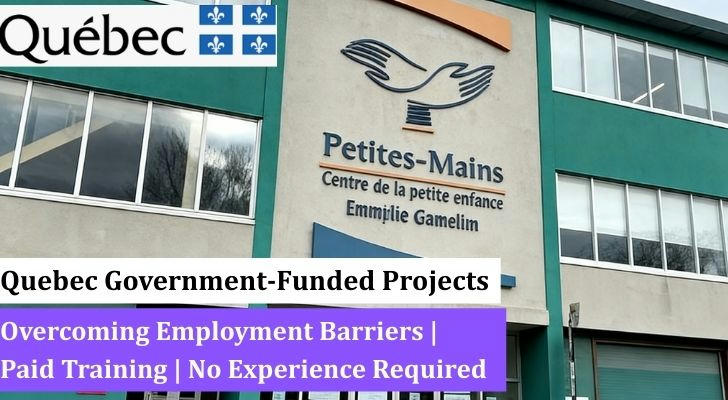
Still struggling to find a job? Finding a job can be challenging, especially when limited experience, skills gaps, or personal responsibilities create barriers to employment. In Québec, Petites-Mains offers government-funded employment courses, designed to support adults who want to return to the workforce or start a new career.. These programs combine paid training, practical skills development, and job placement support, and are open to anyone aged 18 and above, helping participants transition smoothly into employment.
🎯 Why Choose a Government-Funded “Learn a Job” Course?
🔹 High-demand occupations: Training focuses on sectors with continuous hiring needs
🔹 Paid training: Participants gain skills while receiving financial support during training
🔹 Job placement: Programs include employment preparation and employer connections
🔹 Flexible schedules: Offers multiple study sessions to balance family and study.
🔹 No experience required: Open to beginners and career changers
🔹 Childcare support: Access to childcare services provided by CPE Le Royaume des Petites-Mains, allowing parents to participate with peace of mind
🛠️ What Can Be Learned in the Program?
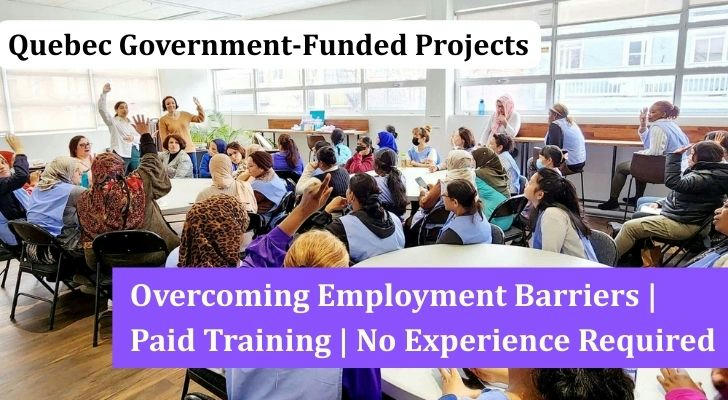
The program emphasizes hands-on, job-focused training, helping participants adapt to real work environments and build confidence and employable skills from day one. Examples include:
Kitchen Assistant: food preparation, hygiene standards, teamwork in professional kitchens
Customer Service Assistant: communication skills, customer interaction, problem handling
Industrial Sewing Machine Operator: machine operation, production workflows, quality control
Receptionist: front-desk operations, scheduling, basic administrative tasks
General Workplace Support Roles: organization, time management, and workplace safety
👥 Who Is This Program Suitable For?
| Age Range | Recommended Profile | Key Benefits |
|---|---|---|
| 18–25 | First-time job seekers | Build practical skills and gain initial work experience |
| 26–35 | Career changers | Transition quickly into in-demand industries |
| 36–45 | Individuals returning to the workforce | Develop job-ready skills and secure stable employment |
| 46–55 | Adults seeking long-term stability | Access high-demand roles with structured support |
💼 Salary and Employment Outlook in Canada
In Canada, entry-level positions such as Kitchen Assistants have an average wage of around CAD $18 per hour (approximately CAD $31,000–$43,000 annually), with stable demand across restaurants and hospitality businesses in urban areas. Similarly, Customer Service and Front Office roles offer annual salaries ranging from CAD $43,000 to $61,000, providing consistent hiring opportunities in retail, hospitality, and administrative sectors, as well as potential for career growth.
📝 How to Enroll in This Program?
Review program details online
Check eligibility requirements (age 18+)
Submit an application form
Participate in an intake interview
Receive training schedule and placement guidance
🌈 Real success stories of Fatima
At first, there was some apprehension about the course, but the instructors provided clear explanations throughout. Integration with other participants was smooth, and opportunities arose to work on various projects, such as preparing meals for homeless individuals or schoolchildren. This experience highlighted different diets and dietary restrictions, while also demonstrating the impact of contributing to others’ well-being. Skills in working quickly and efficiently in the kitchen were developed, thanks to the continuous support from trainers and all the Petites-Mains staff, who were always available to listen and provide guidance. The experience proved highly rewarding and worthwhile.
📌 Conclusion
Government-funded employment courses in Québec provide a realistic pathway for adults facing employment barriers. With paid training, accessible entry requirements, and strong job placement support, these programs help turn learning into lasting employment and long-term stability.