
From Zero to HGV Driver: Cat C Licence and CPC in 12–16 Weeks
The UK logistics sector faces a persistent shortage of qualified HGV drivers, and a range of government-supported Skills Bootcamps exist to help people move into the sector quickly. These programmes combine online learning with practical training and lead to a Category C (Class 2) HGV licence and the Driver Certificate of Professional Competence (Driver CPC), typically with no prior driving experience required and with scheduling designed to fit around work and family commitments.
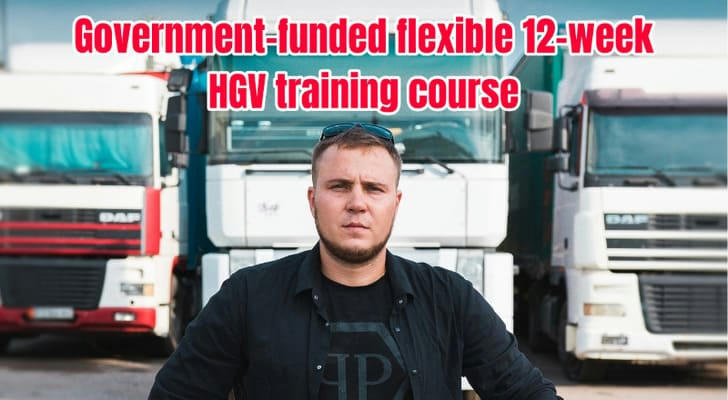
Main advantages of HGV training
- Government-supported Skills Bootcamp funding — many training places are funded through UK Skills Bootcamps and similar schemes, reducing the course charge for eligible applicants.
- No previous HGV experience necessary — courses accept learners with just a full car (Category B) licence and provide step-by-step support to gain provisional entitlement and training.
- Typical duration: 12–16 weeks — most bootcamp variants run for around 12 weeks, with some extending up to 16 weeks depending on the learning pathway and practical availability.
- Experienced instructors and DVSA-approved assessments — practical driving assessments and tests are conducted to DVSA standards at approved centres.
- Combining flexible online theory with professional training — theory modules and hazard perception preparation are usually delivered online so study can be balanced with work and family.
- Category C (Class 2) licence + Driver CPC — successful completion yields the entitlement to drive rigid HGVs and the professional qualification required for paid driving work.
- Employment support — many programmes include job-search help, CV support and links to local employers to convert training into work.
What will be learned and how assessment works
Training follows industry standards and blends theory with hands-on driving. Assessment is not a single traditional pen-and-paper test; instead it combines online theory and hazard perception with practical, professional assessments.
Assessment components
- Online theory test and hazard perception tests (Driver CPC Part 1 / Module 1) taken on screen.
- Practical driving assessment at a DVSA-approved test/assessment centre (Module 3 / on-road and off-road assessments).
- Completion of initial Driver CPC modules (practical demonstration / Module 4) to prove professional competence.
Training topics covered
- HGV road-craft, manoeuvres and safe loading/unloading procedures.
- Digital tachograph use and legal records for driving hours and rest periods.
- Use of in-cab information systems and fleet telematics for performance monitoring.
- Vehicle daily walkaround checks, basic maintenance awareness and “show me / tell me” procedures used during practical tests.
- Professional standards (health & safety, cargo security, driver responsibilities) and basic logistics sector awareness.
Modern training vehicles are maintained to high safety standards and sessions use realistic, work-grade kit so skills transfer directly into employment.
How to apply
- Check local availability — use the course provider’s postcode lookup or the national course finder to confirm whether the Skills Bootcamp runs in the local area.
- Application and document check — the provider will review the existing driving licence; applicants are typically asked to provide identity documents and licence details.
- English & maths assessment — short assessments help identify any additional support needs and allow personalised learning plans to be put in place.
- Personal guidance session — a one-to-one meeting to discuss career goals, course expectations and scheduling options.
- Medical check (D4) — a qualified doctor must complete the D4 medical form required for HGV entitlement. Packets and guidance on D2/D4 are available via DVLA/DVSA guidance.
- Provisional entitlement (D2 & D4 submission) — once the medical is passed and the D2 form is completed, the application is sent to DVLA to add provisional Category C entitlement.
- Course start — after provisional entitlement is granted, online theory study begins and practical lessons are scheduled; theory and hazard perception are usually completed first, followed by practical assessments.
Note: D2 and D4 forms are standard DVLA documents used to apply for provisional higher-category entitlement; the D4 must be completed by a registered medical practitioner.
Who the course suits
| Age band | Typical fit |
|---|---|
| 18–24 | Young entrants seeking a stable, skilled trade and quick route into employment. |
| 25–40 | Career changers or people looking for a reliable sector with strong demand. |
| 41–60 | Mid-career re-skilling, returners to work or those seeking flexible shift patterns. |
| 60+ | Eligible applicants can retrain where health, medical and licence eligibility allow; suitability assessed individually. |
Success stories
- A candidate used Skills Bootcamp funding, completed online theory and practical modules in 12 weeks, obtained Category C entitlement and Driver CPC, and started local delivery work within a month of passing assessments.
- Another trainee progressed from no HGV experience to a regular Class 2 driver role with weekly hours and overtime options, supported by the course’s employer contacts and interview coaching.
Salary and job prospects
Demand for HGV drivers remains strong across logistics, retail and construction, which has supported competitive pay and a variety of shift patterns. Typical annual earnings vary by experience and role: starters can expect around £27,000 per year, with experienced drivers commonly reaching around £47,000 or higher in some roles and specialisms. Regional differences, night-shift premiums and specialist endorsements (e.g., tanker, ADR) affect pay.
Summary
A government-supported Skills Bootcamp provides a focused, practical pathway into a career as a Category C (Class 2) HGV driver. The route usually runs 12–16 weeks, combines flexible online theory with hands-on training and DVSA-standard assessments, and leads to both a licence entitlement and the Driver CPC needed for professional driving. For those seeking stable, in-demand employment with clear progression, the programme is a direct option to move from little or no HGV experience into paid driving work.
Further reading / course reference
Skills Bootcamp in HGV Driving
Useful official links
- DVLA: how to apply for a bus or lorry provisional entitlement (D2/D4 forms and medical).
- Driver CPC training and continuation rules.
- Rules on tachographs for commercial vehicles.