
🎓 Start an HVAC Career Faster with Government-Funded Paid Training
No Need To Worry About Tuition Fees | No College Degree Needed | Earn While You Learn
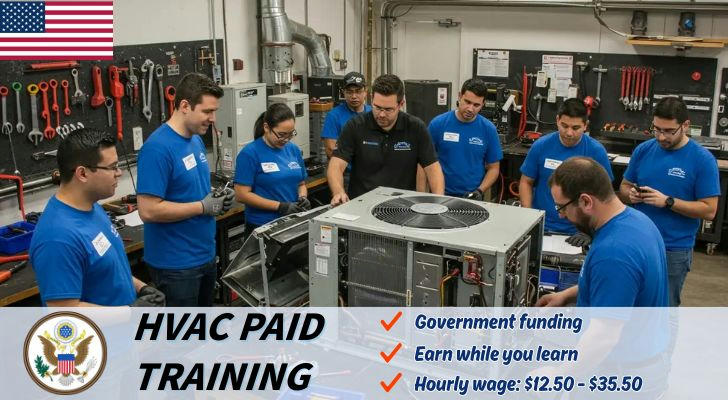
Looking to enter a stable, high‑earning technical field in the United States without taking on college debt? With government‑funded paid HVAC apprenticeship programs registered through official channels, you can earn while you learn: according to official information, apprentice wages typically range from about $12.50 to $35.50 per hour, increasing as your skills and training progress. These programs combine real on‑site training and technical classroom instruction, providing a practical pathway into HVAC, sheet metal fabrication, welding, and other hands‑on technical roles.
🌟 Why Choose Government‑Funded HVAC Training?
Choosing a Registered Apprenticeship for HVAC provides multiple advantages:
💼 Earn Income from Day One — Registered apprentices receive a paycheck from day one, not unpaid internship hours, allowing you to earn income while building your skills.
📚 Officially Recognized Career Path — These programs are approved by federal or state agencies and provide structured paid on‑the‑job training (OJT) and classroom technical instruction, leading to industry‑recognized credentials.
🧠 Structured Training with Hands‑On Practice — Learning isn’t limited to hands‑on work; you also receive systematic theoretical instruction in areas such as electrical fundamentals, refrigeration principles, and safety protocols.
📈 Practical Skill Development and Career Transition — Completing a traditional apprenticeship program gives you knowledge of industry standards such as EPA and OSHA, laying a solid foundation for career advancement, certification, and higher wage levels.
🚀 Stable and Growing Industry Demand — HVAC technicians are in steady demand across residential, commercial, and industrial settings, and apprenticeship programs are designed to help meet workforce shortages in these sectors.
📘 HVAC Apprenticeship Training Course Content
Paid HVAC apprenticeship programs typically include two key components:
🔧 Paid On‑the‑Job Training (OJT)
As an apprentice, you work as a paid employee learning real HVAC system installation, sheet metal fabrication, welding, and maintenance tasks under the guidance of experienced technicians.🎓 Related Technical Instruction
This includes classroom instruction on system fundamentals, blueprint reading, basic electrical skills, safety standards, and refrigerant handling — all integrated with practical work.
Most Registered Apprenticeship programs last around 1 to 4 years to meet industry standards, but some employer‑sponsored or accelerated tracks may allow you to start working in practical roles within about 12–16 weeks and continue advancing as your skills improve.
👨👩👧 Who Can Benefit From This Program?
Government‑funded HVAC apprenticeships are open to candidates from various backgrounds, especially those who want practical training with income:
| Age Range | Typical Candidate | Benefits |
|---|---|---|
| 18–25 years | Recent graduates or early career seekers | Avoid tuition costs and quickly build practical skills |
| 25–40 years | Career changers | Earn while transitioning into a new profession |
| 40–55 years | Skill upgraders or career developers | Expand technical ability, prepare for leadership roles |
| 55+ years | Skilled applicants seeking stability | Practical training with consistent employment focus |
Apprenticeship training does not require a background in HVAC — you only need a willingness to develop professional skills and adapt to workplace practice.
📝 How to Register (Process and Requirements)
The process for joining a government‑funded registered HVAC apprenticeship program typically includes:
📥 Meet Basic Requirements — Most programs require applicants to be at least 18 years old and hold a high school diploma or GED equivalent; some may also require a valid driver’s license or basic assessments.
📥 Visit Apprenticeship.gov
Use the U.S. Department of Labor’s official apprenticeship information platform to filter available Registered Apprenticeship HVAC programs by state, city, or sponsor and review specific requirements and compensation.📥 Submit an Online Application
Follow the job posting instructions to submit your education, identification, and contact information; you may be asked to participate in interviews or testing.📥 Await Acceptance and Begin Training
Once accepted, you can begin paid on‑site learning and related coursework.
This article describes a general registration process; actual requirements may vary by program or employer.
💼 Career Outlook
After completing HVAC apprenticeship training, you will have practical skills and professional qualifications needed to enter the technical workforce:
HVAC technicians and related technical personnel remain among the stable and high‑demand jobs in the labor market. Job growth for these positions is expected to stay strong.
With developed skills, you can take on roles in residential, commercial, and industrial application environments, where wages and job stability tend to be higher.
Combining industry certifications such as EPA, OSHA, and other credentials can further enhance your career advancement opportunities and salary prospects.
❓ Frequently Asked Questions
Is the registered HVAC apprenticeship paid?
Yes. The Registered Apprenticeship model provides wages from the first day of training and typically includes a structured wage progression.
Do I need experience to apply?
No! Most registered apprenticeship programs welcome applicants with no prior HVAC experience and provide systematic training.
Does the program include both on‑the‑job and classroom instruction?
Yes. Apprenticeships combine hands‑on practice with technical classroom instruction to help you build skills through both work and study.
🚀 Take Your First Step
Government‑funded paid HVAC apprenticeship programs offer a practical and efficient pathway into the technical trades. They let you start with little or no experience, gain competitive skills on the job, and earn a paycheck while you train — all while building toward long‑term employment and career success.